
Full Cast Crowns in Gold & Noble Alloys
American Dental Laboratory produces full cast crown restorations in high noble, noble, and base metal alloys. Each crown is digitally designed, cast, and hand-finished in-house in Richardson, TX, with a remake rate consistently below 2%.
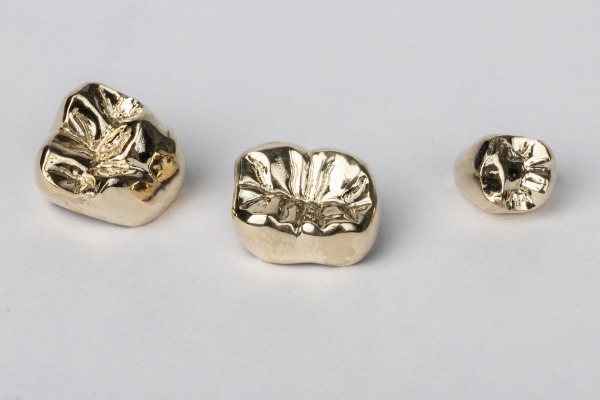
What is a full cast crown?
A full cast crown is a full metal crown made from a single solid piece of alloy, no porcelain, no ceramic, no layers to chip. It has been the clinical benchmark for long-term posterior durability for over 100 years, and modern digital workflows have only made it more precise: we design each crown digitally and mill it in wax before casting, so results stay consistent unit after unit.
Gold remains one of the most biocompatible and non-toxic restorative materials available, which is why a well-made gold metal crown can outlast almost any other restoration in the mouth.
Alloy Options
High Noble
Over 60% gold, platinum, and/or palladium. The premium standard for biocompatibility and marginal fit.
Noble
Over 25% gold, platinum, and/or palladium. A balanced option for durability and cost.
Base Metal
Chrome-cobalt alloys for cases where economy leads the decision..
When a full cast crown is the right prescription
Heavy occlusal load:
Second molars and bruxers, where ceramic materials are at risk of fracture.
Tight occlusal space:
With only 0.5mm minimum reduction needed, full cast works where ceramics can't. That's less drilling and more preserved tooth structure.
Long-term posterior durability:
Crowns, bridges, inlays, and onlays that stay in service for decades.
Opposing natural dentition:
Cast gold is kind to opposing enamel, wearing at a rate close to natural teeth.
Why our cast work holds up
A Century-Old Craft, Modern Tools:
Digital design in Exocad and 3Shape, wax milling before casting, and finishing by hand.
CDT-Made, Start to Finish:
Technicians trained at Dawson Academy, SPEAR Education, Pankey Institute, AACD, and LVI handle every unit.
Margins That Seat:
Our remake rate stays consistently below 2% because fit is checked before shipping, not after seating.
Dependable Scheduling:
10 days in the lab, with 98-99% on-time delivery.
Backed for 5 Years:
Defects in materials or workmanship are covered from the date of completion.
Read what dentists are saying in our testimonials.
Technical details
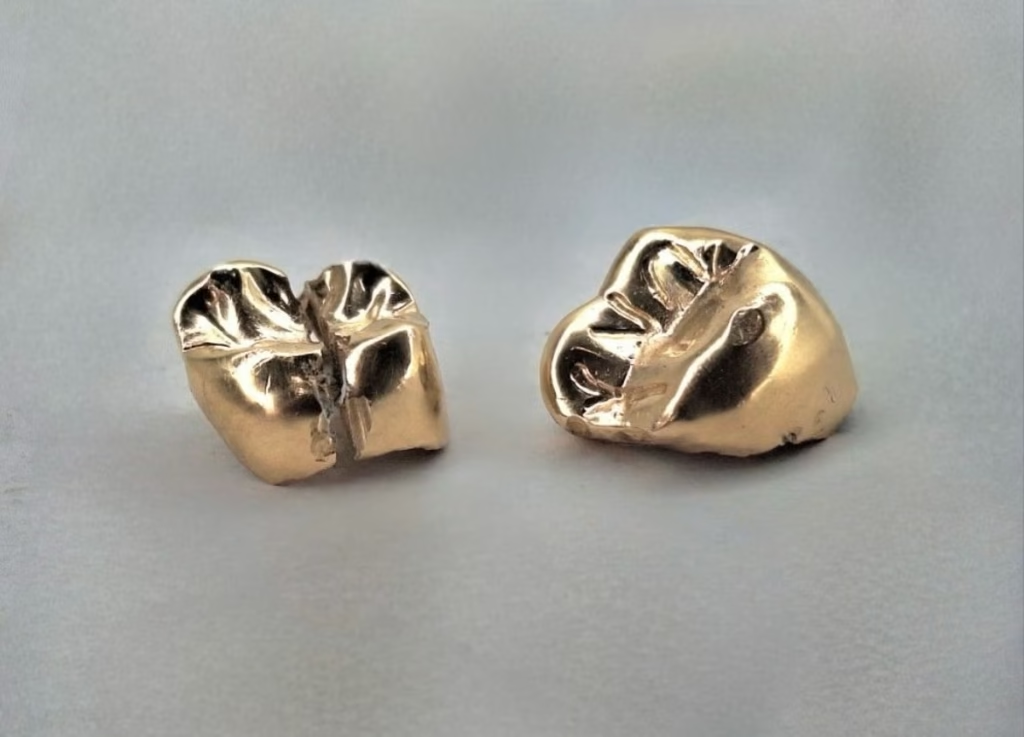
- Restorations: Posterior single units, crowns, bridges, inlays, and onlays.
- Alloy Classes: High noble (60%+ gold/platinum/palladium), noble (25%+), and base metal chrome-cobalt.
- Fabrication: Digitally designed, milled in wax, cast, and finished in-house.
- Best Suited For: Tight occlusal space and heavy-load posterior cases.
- Cementation Systems: Glass ionomer, resin-modified glass ionomer, and auto-cure resins.
- Warranty Period: 5 years from completion.
- In-Lab Time: 10 days.

Preparation Guide
- Minimum of 0.5mm occlusal space reduction.
- Chamfer or shoulder margins preferred.
- Axial walls tapered 3° to 6°.
Questions on a specific prep? Consult our Experts before you scan.
Request a Starter Kit

Getting your cast case to us
- Take the Impression: Digital scan from any major intraoral scanner, or traditional impression with download our Rx form.
- Specify the Alloy: Note high noble, noble, or base metal on the Rx, or leave it to our recommendation.
- We Cast It: Digital design, wax milling, casting, and hand finishing all happen under our roof.
- Seat With Confidence: A CDT checks margins and occlusion before the crown ships.
A Restoration Measured in Decades
When the treatment plan calls for something that simply lasts, send the case to a lab that’s been casting metal since before digital dentistry existed. Send a case or request a free starter kit to get started.
Frequently Asked Questions
Patients with heavy bites, bruxism, limited occlusal clearance, or second molar cases where esthetics don't matter. It's also the kindest option for patients whose opposing teeth have natural enamel, since cast gold wears at nearly the same rate.
Position it by placement. On second molars and lower posteriors, the crown is rarely visible in normal function. For patients who still decline, we produce zirconia in the same lab, so switching materials doesn't mean switching labs.
No. Every crown follows the same digital design and wax milling process regardless of alloy. The choice between high noble, noble, and base metal comes down to biocompatibility, budget, and your preference, not precision.
For the right case, yes. A gold metal crown that serves 20-30 years often costs less per year of function than a ceramic that needs replacement sooner. We'll quote the alloy options up front so you and the patient can decide with real numbers.
Yes. Send the scan or impression along with any notes on the existing restoration, and our technicians will match contour, occlusion, and alloy class so the new crown feels familiar from the first bite.